

Quick answer: As of July 12, 2026, it costs $0.82 to mail a standard one-ounce letter in the United States using USPS First-Class Mail. One Forever stamp covers this cost. Letters over one ounce cost more: two ounces is $1.09, three ounces is $1.36. Large envelopes (9x12 and larger) always mail at flat rate starting at $1.63 for one ounce. Metered mail is $0.04 cheaper per piece than stamped mail at each weight tier.
The cost to mail a letter changed on July 12, 2026, when USPS implemented its latest rate adjustment. A standard one-ounce First-Class letter now costs $0.82 , up from $0.78 before the July increase. For individuals mailing occasional letters, the difference is minor. For businesses mailing hundreds or thousands of pieces monthly, understanding every rate tier, surcharge, and format choice determines real budget impact.
This guide covers the complete 2026 cost to mail a letter, from the basic stamp price through weight tiers, large envelope rates, the non-machinable surcharge, metered mail savings, and how envelope format affects what you pay at the post office.
The 2026 USPS Rate Change: What Changed on July 12
USPS implemented a rate increase on July 12, 2026. This is the rate table for every standard First-Class mail piece:
| Mail Type | Rate Before July 12 | Rate From July 12 | Change |
|---|---|---|---|
| First-Class letter, 1 oz (stamped) | $0.78 | $0.82 | +$0.04 |
| First-Class letter, 1 oz (metered) | $0.74 | $0.78 | +$0.04 |
| Additional ounce (each) | $0.25 | $0.27 | +$0.02 |
| Non-machinable surcharge | $0.47 | $0.49 | +$0.02 |
| Postcard (domestic) | $0.59 | $0.62 | +$0.03 |
| First-Class flat, 1 oz | $1.50 | $1.63 | +$0.13 |
How Much Does It Cost to Mail a Letter by Weight: 2026 Rate Table
The standard letter rate applies to mail pieces that qualify as a USPS letter: no wider than 6-1/8 inches, no longer than 11-1/2 inches, and no thicker than 1/4 inch. A #10 envelope with paper contents falls well within these limits. Here is the complete 2026 cost table by weight:
| Weight | Stamped (Forever stamp) | Metered | Stamps Needed | Typical Contents |
|---|---|---|---|---|
| Up to 1 oz | $0.82 | $0.78 | 1 Forever stamp | 1-page letter, invoice, check, greeting card |
| 1 to 2 oz | $1.09 | $1.05 | 1 Forever + 1 Additional Ounce | 2-page letter, folded brochure, multi-insert |
| 2 to 3 oz | $1.36 | $1.32 | 1 Forever + 2 Additional Ounce | 3-4 page document with inserts |
| 3 to 3.5 oz | $1.63 | $1.59 | 1 Forever + 3 Additional Ounce | Multi-page packet at letter-size maximum |
The maximum weight for a standard letter is 3.5 ounces. Anything heavier than 3.5 ounces is classified as a flat (large envelope) or package regardless of physical dimensions, and the flat rate structure applies. For the complete stamp count guide by envelope size and weight, see How Many Stamps Do I Need? The Complete Guide by Envelope Size.
How Envelope Format Affects the Cost to Mail a Letter in 2026

The single most important factor in how much it costs to mail a letter in 2026 is often overlooked: the envelope format determines which postage rate applies, and the difference between formats is $0.81 per piece.
| Envelope Format | Size | USPS Class | Cost at 1 oz (2026) | Best For |
|---|---|---|---|---|
| #10 envelope | 4-1/8 x 9-1/2 in | First-Class Letter | $0.82 | Checks, invoices, statements, business letters |
| 6x9 envelope | 6 x 9 in | First-Class Letter | $0.82 | Brochures, photos, half-folded documents |
| 9x12 envelope | 9 x 12 in | First-Class Flat | $1.63 | Flat documents, contracts, reports |
| 10x13 envelope | 10 x 13 in | First-Class Flat | $1.63 | Legal size documents, thick packets |
The 6x9 envelope is the format most buyers underestimate. At exactly 6 inches tall, a 6x9 falls within USPS letter size limits when contents keep it under 1/4 inch thick. A half-folded 8.5 x 11 sheet fits cleanly inside a 6x9, and the piece mails at letter rate. The same document in a 9x12 , even at identical weight , automatically mails at flat rate, costing $0.81 more per piece.
Over 500 monthly pieces, choosing 6x9 over 9x12 where the content allows saves $405 per month in postage alone. For the complete postage analysis, see 6x9 Envelope Postage: Letter Rate vs Flat Rate Guide.
The Non-Machinable Surcharge: When a Letter Costs More Than $0.82
The non-machinable surcharge adds $0.49 to the base postage cost in 2026, making a one-ounce letter cost $1.31 instead of $0.82. It applies when an envelope cannot be processed by USPS automated sorting equipment. The triggers:
- Square envelope: Any envelope where the length divided by height falls outside 1.3 to 2.5
- Rigid or hard contents: A coin, button, key, or card that creates a lump inside the envelope
- Clasps, strings, or buttons: Any closure other than adhesive or moisture-activated gum
- Over 1/4 inch thick: Too much content stuffed into a letter-size envelope
- Polycoated or glossy exterior: Some materials jam sorting machines
A standard sealed #10 envelope containing paper pages avoids every trigger. The surcharge is most commonly incurred by greeting cards in square envelopes and by direct mail pieces with hard promotional inserts. For the full rules, see Non-Machinable Envelope Guide: Surcharge Rules Explained.
How Much Does It Cost to Mail a Large Envelope in 2026
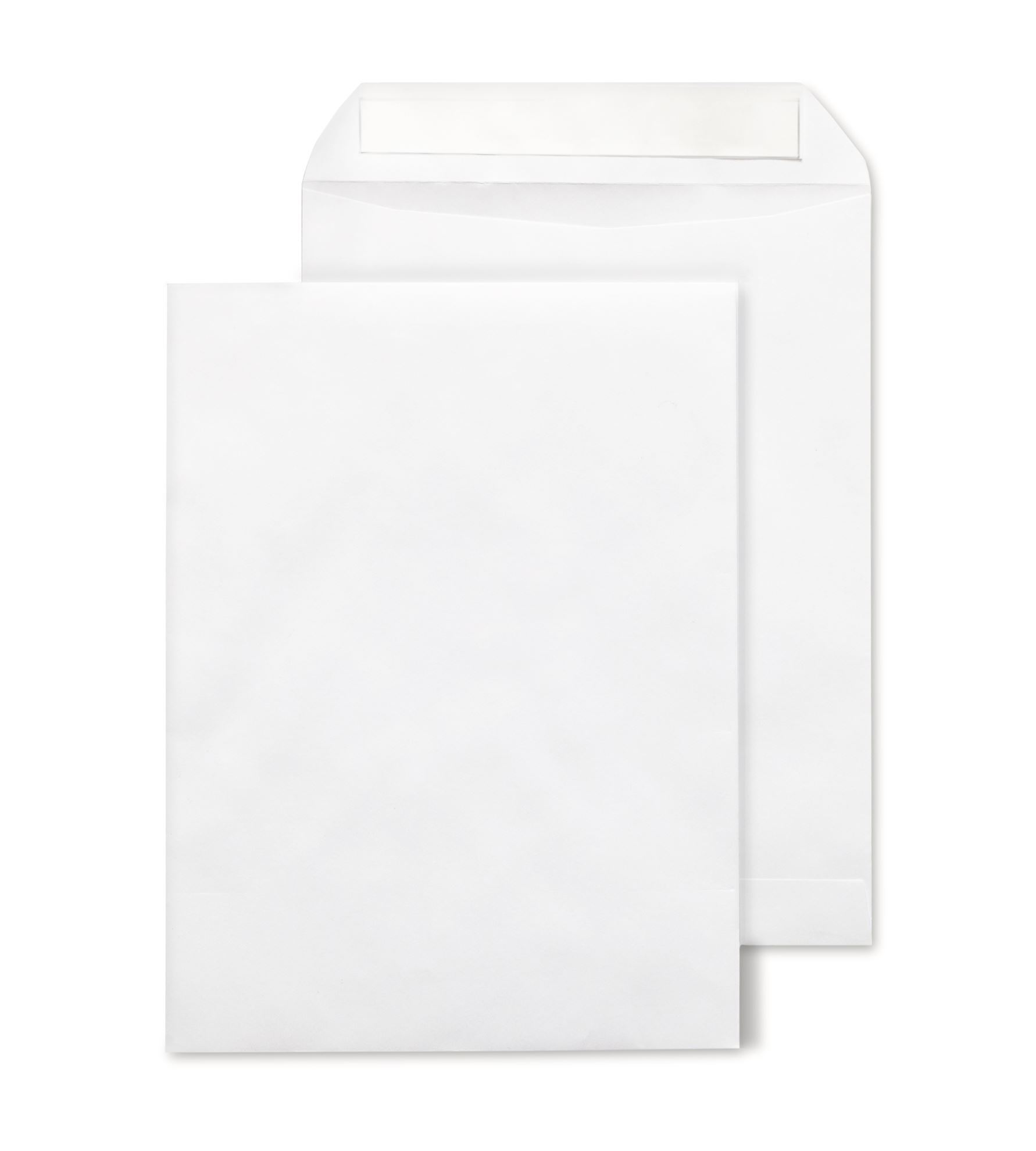
Large envelopes , what USPS calls "flats" , always mail at flat rate. The 9x12 is the most common format in this category. Here is the complete 2026 flat rate cost table:
| Weight | First-Class Flat Rate (Stamped) | Metered Rate |
|---|---|---|
| Up to 1 oz | $1.63 | $1.59 |
| 1 to 2 oz | $1.90 | $1.86 |
| 2 to 3 oz | $2.17 | $2.13 |
| Each additional oz | +$0.27 | +$0.27 |
Flat-rate postage can be reduced on volume programs by weighing sealed envelopes before mailing. Multi-page contract packets and thick document sets often land in the 2-3 oz range, making postage costs meaningfully higher than the minimum $1.63. Tyvek envelopes reduce the envelope material weight, which helps on borderline weight pieces. For the full 10x13 postage breakdown, see 10x13 Envelope Postage: Stamps and Cost Guide 2026.
Stamps vs Metered Mail: The Cost Difference in 2026
The metered mail discount in 2026 is $0.04 per one-ounce First-Class letter , $0.82 stamped vs $0.78 metered. At low volume, this difference is negligible. At business volume, it accumulates:
| Monthly Volume | Stamped Cost ($0.82) | Metered Cost ($0.78) | Monthly Savings | Annual Savings |
|---|---|---|---|---|
| 100 pieces | $82 | $78 | $4 | $48 |
| 500 pieces | $410 | $390 | $20 | $240 |
| 1,000 pieces | $820 | $780 | $40 | $480 |
| 5,000 pieces | $4,100 | $3,900 | $200 | $2,400 |
Metered mail requires a postage meter or an online postage service subscription. For the complete analysis of when metered mail makes financial sense vs stamps, including the break-even calculation, see Metered Mail vs Stamps: Which Makes More Sense for Your Business Envelope Program.
Other Mailing Costs: Certified Mail, International, and Postcards
The $0.82 letter rate covers standard domestic First-Class mail only. Other common mailing services have additional or separate costs in 2026:
- Certified Mail: $3.85 added to standard postage. Provides a tracking number and mailing date record. Required to dispute late-filing claims on tax returns and legal documents. Total for a one-ounce certified letter: $4.67.
- Return Receipt (green card): $3.55 additional. Provides a signed confirmation of delivery. Added on top of Certified Mail.
- Postcard (domestic): $0.62 in 2026, provided the card meets USPS postcard dimensions (3.5 x 5 inches minimum, 4.25 x 6 inches maximum).
- International letter (1 oz): $1.70 in 2026 for a First-Class international letter to any country. A Forever stamp does not cover international postage.
- Registered Mail: Starts at $19.70 in 2026. For high-value or sensitive items requiring maximum security and a chain-of-custody record. Not standard for routine business mail.
For the full guide to stamp types including Forever stamps, Additional Ounce stamps, Global stamps, and postcard stamps, see Postage Stamps and Buying Options: The Complete US Guide for 2026.
How Envelope Type Affects Your Actual Mailing Cost
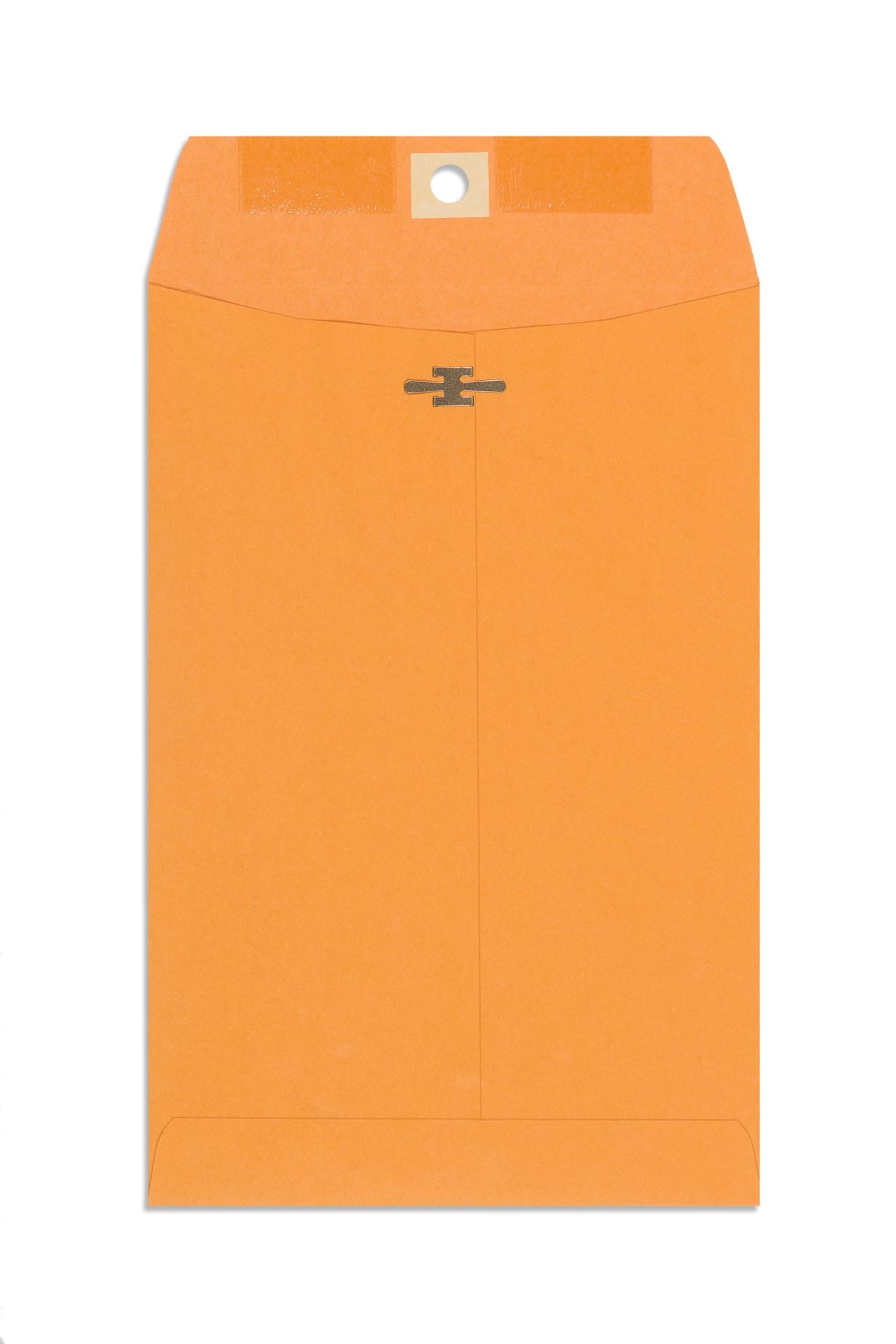
Beyond size, the envelope's construction and closure type can also affect the final postage cost. Specific situations to be aware of:
Self-seal envelopes and postage
Self-seal envelopes (peel-and-seal, flip-and-stick) have the same postage cost as gum-flap envelopes in the same size. The closure method does not change the USPS rate. What matters is the overall envelope dimensions, weight of contents, and whether the sealed piece triggers the non-machinable surcharge. For self-seal envelope options, see self seal envelopes.
Window envelopes and postage
A #10 window envelope mails at the same $0.82 First-Class letter rate as a plain #10 envelope. The poly-film or glassine window does not trigger the non-machinable surcharge or change the postage classification. Window envelopes at 9x12 still mail at flat rate. For window envelope formats, see window envelopes.
Security-tinted envelopes and postage
Security-tinted envelopes , which have an interior crosshatch pattern that blocks contents from being read through the envelope , have identical postage to plain envelopes of the same size. The interior tinting does not affect USPS classification or rate. For #10 envelope postage rates in full detail, see #10 Envelope Postage: Stamps and Cost Guide for 2026.
How Businesses Reduce the Cost to Mail Letters in 2026
For operations mailing regularly, four practical approaches reduce the total cost to mail a letter in 2026:
- Use the smallest envelope that fits the content. A #10 or 6x9 at letter rate costs $0.82. A 9x12 at flat rate costs $1.63. The envelope format is the most impactful single variable in postage cost.
- Switch from stamps to metered or online postage. Metered mail saves $0.04 per piece, which adds to $480 per year on 1,000 monthly pieces. Online postage platforms offer the same metered rate without a physical meter lease.
- Avoid the non-machinable surcharge. Keep contents under 1/4 inch thick in sealed letter envelopes. Use adhesive closures, not clasps. Use rectangular envelopes with appropriate aspect ratios.
- Buy Forever stamps before rate increases. A Forever stamp purchased today at $0.82 covers a one-ounce letter at whatever the rate is when it is used. Buying in quantity before a rate increase locks in savings on future mailings.
For the complete letter mailing guide covering USPS mail classes, addressing rules, return address requirements, and drop-off options, see Mailing and Sending Letters: The Complete US Business Guide.
What Customers Say About Business Envelopes
★★★★★ Gitty, Verified Buyer | #10 White Business Envelopes
"Great quality basic envelopes at great price! Thank you!"
★★★★★ Jacob, Verified Buyer | #10 White Business Envelopes
"Great product and shipped very well! Better than I get from local office supply and a better value!"
★★★★★ Shaindy, Verified Buyer | #10 Window Envelopes
"Super quality! Great product."